
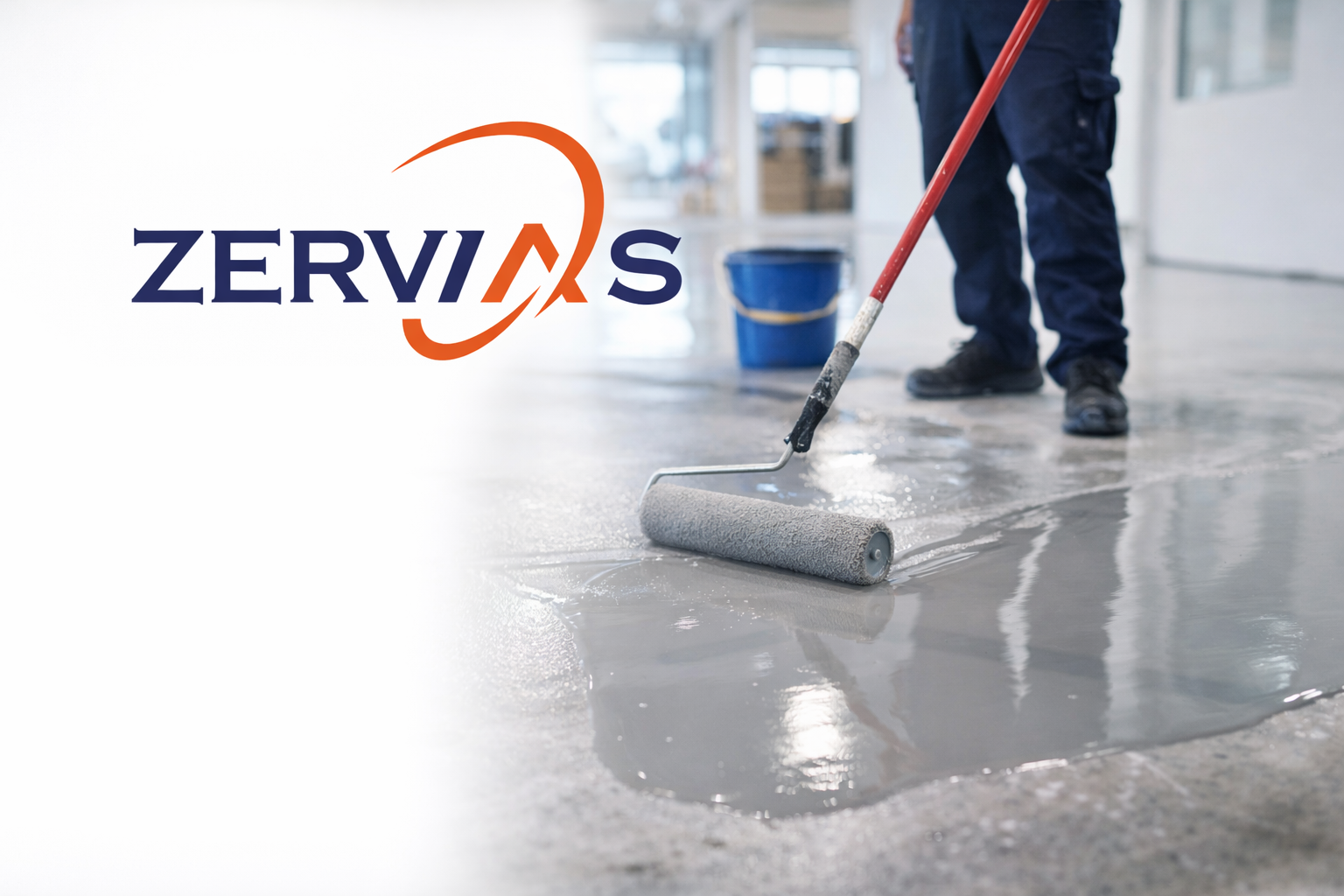
Epoxy holds over 42% of the U.S. floor coatings market, and that dominance is not accidental. According to Mordor Intelligence (2024), epoxy remains the most widely chosen floor coating system across residential, commercial, and industrial applications. But market share does not answer the question most homeowners and business owners are actually asking: is epoxy the right choice for my space?
If you have been researching epoxy floor coating in West Michigan and are not sure whether it fits your situation, this post breaks down exactly what epoxy is, where it works best, and what separates a professional installation from a weekend DIY attempt.
What Is Epoxy Floor Coating?
Epoxy is a two-part coating system made up of a resin and a hardener. When combined, they create a chemical reaction that bonds directly to concrete, producing a hard, seamless surface that becomes part of the floor rather than simply sitting on top of it.
The result is a surface that resists chemicals, oil, stains, abrasion, and heavy traffic. Depending on the system used, epoxy finishes are available in full flake, solid color, metallic, and self-leveling styles, each suited to different aesthetic goals and performance requirements.
Not all epoxy products are the same. The two-component professional systems used in commercial and industrial settings perform at a substantially higher level than the single-component products sold in home improvement stores.
For a full look at available systems, visit the Zervas FM Epoxy Floor Services page.
Where Is Epoxy Floor Coating Used?
Epoxy is installed across a wide range of spaces including garages, warehouses, manufacturing facilities, commercial kitchens, retail floors, healthcare environments, and residential basements. Both homeowners and commercial property owners use it for the same fundamental reason: concrete, left unprotected, degrades.
In West Michigan specifically, the climate accelerates that degradation. Cold winters, road salt tracked in from driveways and parking areas, and freeze-thaw cycles create ongoing stress on concrete surfaces. Epoxy seals and protects against moisture intrusion, chemical exposure, and surface wear.
Zervas FM handles both residential and commercial installations. You can learn more on the Residential Services page and the Epoxy Floor Care Services page.
Signs Your Floor May Be Ready for Epoxy Coating
Not every concrete floor needs epoxy immediately, but these signs suggest your surface would benefit sooner rather than later:
Concrete is cracking, pitting, or showing visible surface wear
Oil, chemical, or moisture stains are difficult to clean and keep coming back
The surface looks dull, unfinished, or significantly aged
You are wrapping up a new build or renovation and want a finished, protective surface
You want a cleaner, safer, easier-to-maintain floor for daily operations or home use
Salt and moisture from West Michigan winters are working their way into the surface
Any one of these is reason enough to have the floor evaluated. Several together suggest the window for a straightforward installation may be closing.
Epoxy vs. DIY Kits: What Is the Real Difference?
Walk into any home improvement store and you will find epoxy kits marketed for garage floors at accessible price points. The results, however, rarely hold up and understanding why comes down to one word: preparation.
Professional epoxy installation begins with diamond grinding the concrete surface to open the pores and create the mechanical profile that allows the coating to bond correctly. It also requires moisture testing, crack assessment, and product selection matched to the specific use case of the space.
DIY kits typically use single-component products that do not chemically cure the same way professional two-component systems do. They are applied over surfaces that have not been properly prepared. The failure rate is high enough that professional installers regularly get called in to strip failed DIY jobs before starting over.
Professional installation costs more upfront. It also lasts significantly longer and does not require removal and reinstallation a year or two later.
Learn more about what professional installation involves at the Zervas FM Epoxy Floor Care Services page.
How Long Does Epoxy Floor Coating Last?
Lifespan depends on several variables: the quality of surface preparation, the type of epoxy system used, the volume and nature of traffic the floor receives, and how consistently the surface is maintained after installation.
Professionally installed epoxy in a well-maintained setting performs for many years under normal conditions. High-traffic industrial environments with heavy equipment or chemical exposure will see different results than a residential garage or retail floor.
The single biggest factor in longevity is preparation quality. That is where most premature failures begin.
Note for client: if Zervas FM provides a specific performance warranty or lifespan guarantee, insert that information here.
Where to Get Professional Epoxy Floor Coating in West Michigan
Zervas Facility Maintenance has been serving residential and commercial properties across West Michigan since 1988. Their epoxy services cover a range of systems including 100% flake epoxy, metallic epoxy, quartz-filled floor systems, and hybrid polyurea top coats for garages, warehouses, manufacturing spaces, and commercial facilities of all sizes.
As a family-owned and fully insured operation with no long-term contracts, Zervas FM offers professional installation without the commitment structure that puts buyers off.
To see available systems and get a free estimate, visit the Epoxy Floor Care Services page.
Frequently Asked Questions
What is epoxy floor coating made of?
Epoxy floor coating is made from two components, a resin and a hardener, that are mixed together and applied to concrete. The chemical reaction between the two creates a hard, durable, bonded surface.
Is epoxy floor coating worth it for a garage?
For most homeowners in West Michigan, yes. Epoxy protects garage concrete from oil stains, road salt, moisture, and surface wear while creating a cleaner, easier-to-maintain surface.
How long does professional epoxy floor coating last?
Lifespan varies based on surface preparation, product type, traffic, and maintenance. Professionally installed systems consistently outlast DIY alternatives by a significant margin.
Can epoxy be applied to any floor?
Epoxy bonds to concrete. The concrete must be structurally sound, properly prepared, and meet moisture thresholds before installation. A professional assessment determines whether a floor is ready.
How do I get an epoxy floor quote in West Michigan?
Contact Zervas FM through the estimate request page or call (616) 638-6228 for a free quote on residential or commercial epoxy installation.
Ready to Upgrade Your Floors?
Whether it is a garage, warehouse, or commercial space, Zervas FM has installed epoxy floors across West Michigan since 1988. See what is possible for your space.