
Epoxy vs. Cement Coatings: Which Floor Finish Is Best for Your Property?
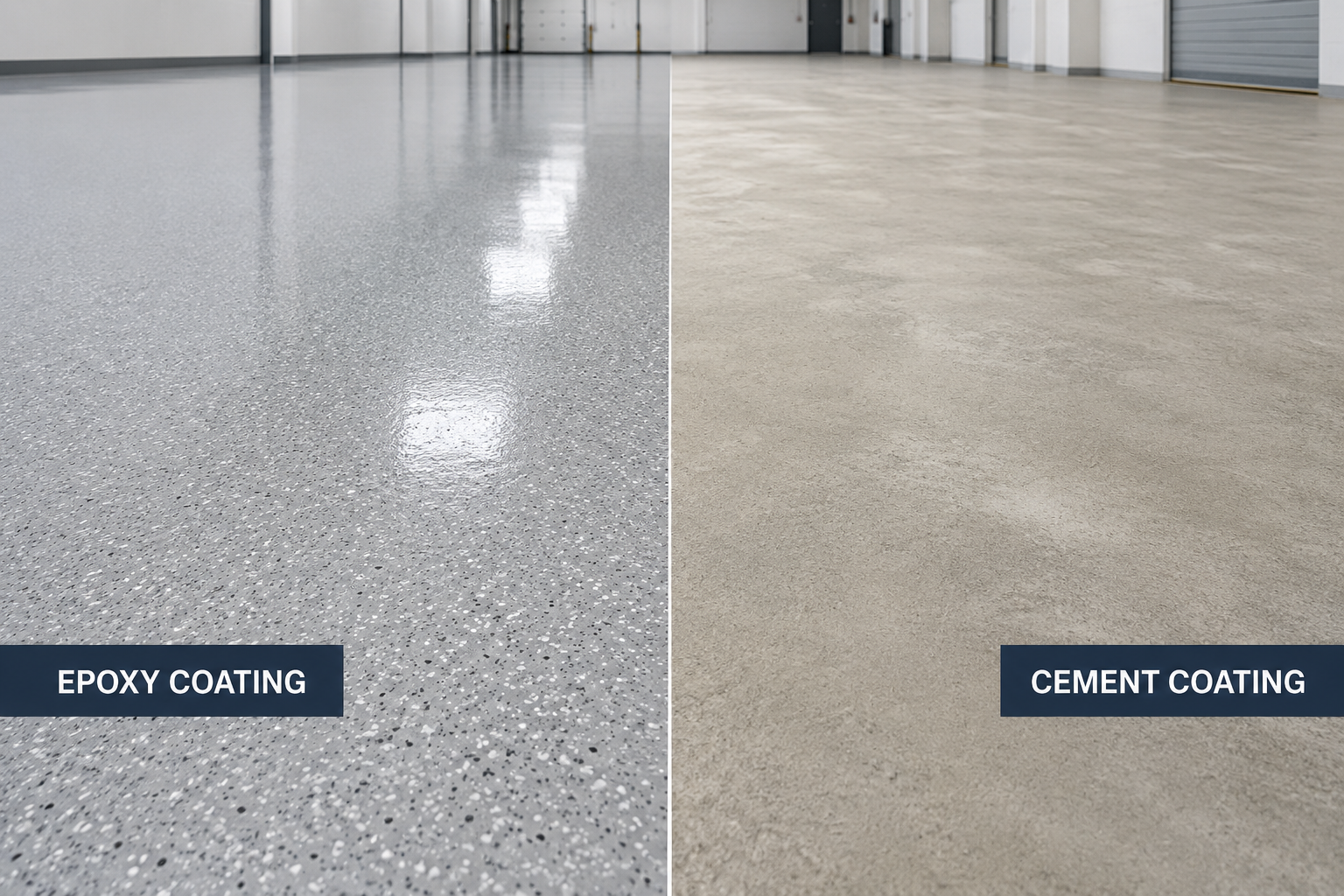
Choosing the right floor coating is a long-term decision. A professionally installed epoxy floor can last well beyond 20 years before needing reapplication , making this a choice that will follow your property for decades. Yet many West Michigan property owners, whether they manage a garage, a warehouse, or a commercial facility, still face the same question: epoxy vs. cement coating , which one is actually right for my space?
Both options deliver real performance. But they are built for different conditions, different budgets, and different use cases. Getting this decision wrong means early peeling, premature wear, or a surface that simply was not engineered for the demands of your environment.
This guide breaks down what each coating system actually is, how they compare across the factors that matter most, and which choice makes sense for common property types across West Michigan.
What Is Epoxy Floor Coating?
Epoxy is a two-part system: a resin and a hardener that, when combined, chemically bond to a concrete substrate. The result is a hard, seamless surface with strong resistance to chemicals, abrasion, impact, and moisture.
It is one of the most versatile floor systems available. Epoxy performs well across a wide range of applications including garages, basements, retail floors, commercial kitchens, warehouses, and manufacturing facilities.
Finish options include:
Solid color , clean, uniform, professional
100% flake systems , textured, slip-resistant, decorative
Metallic epoxy , high-gloss, visually striking, ideal for showrooms or upscale retail
For a full breakdown of epoxy options available to West Michigan homeowners and businesses, visit the Zervas FM Epoxy Floor Services page.
What Are Cement Coatings?
Cement coatings are protective surface systems applied to concrete using materials such as polyurethane cement, polyurea, or acrylic-cement blends. Unlike standard epoxy, these systems are often chosen for specific high-demand performance requirements.
Where they stand apart is in environments with extreme conditions. Urethane cement, for example, is engineered to withstand thermal shock , rapid temperature changes that occur when boiling water hits a cold floor, or when industrial wash-down cycles are part of daily operations. Epoxy is generally not recommended in these environments.
Cement coatings are common in:
Commercial and institutional kitchens
Food processing and beverage manufacturing facilities
Brewery floors
Outdoor surfaces requiring UV stability
Spaces with extreme moisture or chemical exposure
It is worth noting that epoxy and cement-based systems are sometimes used together in layered configurations, with each layer engineered for a specific performance role.
Epoxy vs. Cement Coatings: Side-by-Side Comparison
Rather than declaring one option universally superior, the smarter approach is to compare both across the factors that actually drive the decision.
Durability
Both systems are highly durable. Epoxy offers excellent chemical and abrasion resistance in standard residential and commercial settings. Cement coatings have the edge in environments with thermal shock, extreme moisture, or heavy industrial wash-down protocols.
Best Use Cases
Epoxy: garages, basements, warehouses, retail spaces, commercial floors. Cement coatings: food processing, commercial kitchens with temperature extremes, outdoor surfaces, brewery floors.
UV Resistance
Epoxy is not recommended for direct outdoor sunlight exposure , it will amber and degrade over time. Polyaspartic finishes and cement-based systems handle UV exposure significantly better.
Surface Preparation
Both require proper concrete surface preparation. Neither system performs well over a poorly prepared substrate. This is the single most critical factor in long-term performance , and one reason professional installation matters.
Finish and Aesthetics
Epoxy offers far more customization: colors, flake patterns, metallic effects. Cement coatings tend toward functional, matte finishes with less visual variety.
Cost
Epoxy is generally more cost-effective upfront. Cement-based systems , particularly urethane cement , typically carry higher installation costs due to material complexity and labor requirements.
Lifespan
Professionally installed epoxy can last well beyond 20 years in residential settings. Industrial epoxy under heavy traffic typically performs for 5 to 10 years before maintenance or reapplication is needed. Lifespan for either system depends heavily on preparation quality, installation, and ongoing care.
For details on Zervas FM's full floor care capabilities, visit Floor Care & Restoration and Epoxy Floor Services.
Which Floor Coating Is Right for Your Space?
The right coating is determined by how the space is used, what it is exposed to, and what performance the floor needs to deliver over time. Here is how common property types typically break down:
Garage or basement: Epoxy is the standard choice. It handles vehicle traffic, road salt exposure, oil, and moisture well, and delivers a clean, finished appearance. Michigan's freeze-thaw cycles and winter road salt tracking make proper surface prep especially important here.
Commercial warehouse or manufacturing floor: Epoxy or a layered system depending on traffic intensity and chemical exposure. A professional assessment helps determine whether a single system or a hybrid approach is appropriate.
Restaurant or commercial kitchen: Urethane cement is typically preferred. Thermal shock from hot water and wash-downs, combined with hygiene and slip-resistance requirements, makes cement coatings the stronger fit in these environments.
Outdoor surfaces or high UV exposure: Polyaspartic or cement-based coatings perform better than standard epoxy when direct sunlight is a regular factor.
Retail or office space: Epoxy delivers the polished, professional finish most commercial spaces want, with options to match brand aesthetics through color, flake, or metallic systems.
Not sure which direction fits your property? View our epoxy services or reach out for a professional assessment.
Why Professional Installation Makes All the Difference
The most common cause of floor coating failure is not the product , it is surface preparation. Whether the system is epoxy or cement-based, a coating applied over a poorly prepared, contaminated, or moisture-laden concrete slab will fail. It is not a matter of if, but when.
DIY epoxy kits are widely available, but they are engineered for light residential use and typically require the same preparation standards as professional-grade systems, standards that are difficult to achieve without the right equipment and experience. Peeling, delamination, and uneven finishes are common outcomes when preparation steps are skipped or incomplete.
Zervas FM has been delivering floor care and epoxy installations across West Michigan since 1988. The team is fully insured and brings decades of experience across both residential and commercial applications, from garage floors and basement systems to warehouse and retail environments.
Learn more about residential floor services or explore the full range of floor care and restoration options.
Where to Get Expert Floor Coating in West Michigan
Zervas Facility Maintenance provides professional epoxy floor installation and floor care services to residential and commercial properties across West Michigan. Based in Norton Shores, MI, the team serves garages, basements, warehouses, retail spaces, and commercial facilities throughout the region.
Whether you are comparing options, ready to move forward, or need a second opinion on what your space requires, Zervas FM offers free estimates with no pressure and no long-term contracts.
Explore the epoxy floor services page or visit floor care and restoration to see the full scope of what the team handles.
Not Sure Which Coating Is Right for Your Space?
Zervas FM has been installing epoxy and floor coating systems across West Michigan since 1988. Get a professional assessment and a free estimate, no guesswork, no pressure.
View Our Epoxy Floor Services or Request a Free Estimate Today!
Frequently Asked Questions
What is the difference between epoxy and cement floor coatings?
Epoxy is a two-part resin-and-hardener system that bonds chemically to concrete, producing a hard, seamless surface. Cement coatings, including polyurethane cement and polyurea blends, are engineered for more demanding environments, particularly those subject to thermal shock, extreme moisture, or heavy industrial wash-down cycles. Both systems are highly durable, but they are designed for different performance requirements.
Which floor coating is best for a garage in Michigan?
Epoxy is the standard choice for residential and commercial garages in Michigan. It handles vehicle traffic, oil, road salt, and moisture effectively. Michigan's freeze-thaw cycles make proper surface preparation especially important; a professionally installed system will significantly outlast a DIY application.
How long does epoxy floor coating last?
A professionally installed epoxy floor can last well beyond 20 years in residential settings. Industrial epoxy under heavy daily traffic typically performs for 5 to 10 years before maintenance is needed. Longevity depends heavily on the quality of preparation, installation standards, and post-installation maintenance.
Can epoxy be applied outdoors in Michigan?
Standard epoxy is not recommended for surfaces with direct, prolonged exposure to sunlight. UV rays cause epoxy to yellow and degrade over time. For outdoor applications, polyaspartic coatings or cement-based systems are better suited to Michigan's climate and sun exposure conditions.
Does Zervas FM install both epoxy and cement coatings in West Michigan?
Zervas FM provides professional epoxy floor installation and floor care services for residential and commercial properties across West Michigan. Contact the team for a free estimate and a professional assessment to determine which system is the right fit for your space.