
Why Restaurant Hood and Oven Cleaning Is a Health Code Requirement
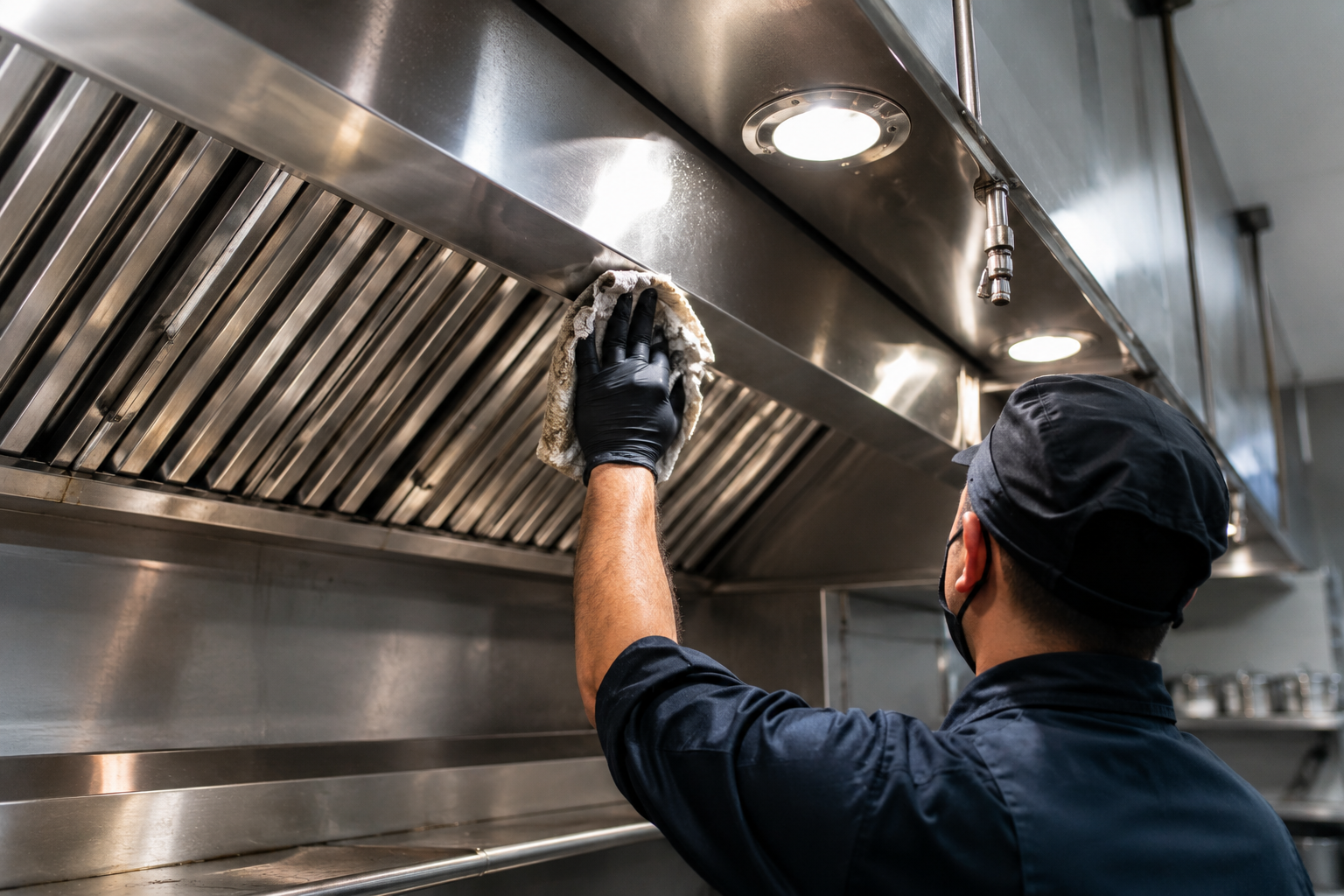
Nearly 8,000 restaurant fires occur in the US every year, and grease buildup in exhaust systems is one of the leading causes, according to NFPA data. Despite that, many restaurant owners treat hood cleaning as a box to check rather than a genuine safety and compliance priority. That changes fast after a fire marshal visit, a failed health inspection, or a grease fire in the kitchen.
This post breaks down exactly what restaurant hood cleaning West Michigan food service businesses are required to do by law, what inspectors look for, and how regular professional service protects your business from fines, shutdowns, and fire risk.
What Is Commercial Hood and Oven Cleaning?
Commercial hood and oven cleaning covers the full exhaust system, not just a surface wipe-down. A proper cleaning includes the canopy, filters, ductwork, exhaust fan, and every grease-contact surface in between.
As a kitchen operates, grease-laden vapors travel upward through the hood and into the ductwork. That grease does not just disappear. It coats every internal surface it touches and builds up over time into a layer of highly flammable residue. The filters trap some of it, but the ductwork and exhaust fan accumulate grease regardless of how often filters are swapped out.
Routine filter maintenance is not the same as a professional cleaning. Filters need regular attention, but they only address one part of a larger system. The ductwork between the hood and the rooftop exhaust fan is where dangerous buildup goes unnoticed until it becomes a fire risk or an inspection violation.
For more on what Zervas FM includes in professional hood and oven cleaning, visit the hood and oven cleaning page.
What Does the Law Actually Require?
The governing standard for commercial kitchen hood cleaning in the US is NFPA 96, the National Fire Protection Association's Standard for Ventilation Control and Fire Protection of Commercial Cooking Operations. This is not a suggestion. It is the benchmark that fire marshals and health departments use when they walk into your kitchen.
Under NFPA 96, cleaning frequency is determined by cooking volume and type:
Monthly — high-volume operations, 24/7 kitchens, and solid fuel cooking such as wood-fired or charcoal grills
Quarterly — moderate-volume commercial kitchens
Semi-annually — lower-volume operations such as smaller cafes or catering kitchens
Annually — minimal grease-producing environments such as some institutional or seasonal kitchens
These intervals apply to the full system cleaning, not just filter changes. And critically, NFPA 96 requires that cleaning be performed by properly trained personnel. In-house staff wiping down the hood canopy does not satisfy the requirement.
Local fire marshals and health departments in Michigan enforce these standards. Non-compliance can result in fines, forced shutdowns, and voided insurance coverage if a fire occurs and documented cleaning records are not on file.
Visit the hood and oven cleaning page for more information on service options.
What Happens If You Skip It?
The consequences of neglected hood and oven cleaning go beyond a failed inspection. Here is what restaurant owners and kitchen managers are actually risking.
Grease fire. Accumulated grease in a duct system ignites rapidly and spreads through the ductwork. A hood fire that might have been contained becomes a structure fire once the duct system carries it upward.
Failed health inspection. Grease accumulation visible in the hood canopy, filters, or ductwork is a direct violation. Health inspectors are trained to look for it, and it does not take much to trigger a citation.
Insurance claim denial. Many commercial property and liability policies require documented NFPA 96 compliance. If a fire occurs and you cannot produce cleaning records, the insurer has grounds to deny the claim.
Forced shutdown. Fire marshals have the authority to close a kitchen on the spot if they determine it poses an immediate fire hazard. A cleaning that was skipped or delayed can result in a closure during your busiest service period.
Reputation damage. Failed inspections are public record in Michigan. A closure or a documented violation can surface in reviews, local news, and health department databases.
For information on commercial cleaning services beyond the kitchen, visit the Zervas FM commercial services page.
How Often Does Your Kitchen Need Professional Cleaning?
Frequency under NFPA 96 is driven by what you cook and how much you cook, not by calendar preference. The categories are worth understanding in practical terms.
A high-volume kitchen running service for lunch and dinner six or seven days a week almost certainly falls into the monthly category, especially if the menu involves heavy frying, char-broiling, or open flame cooking. A wood-fired pizza oven or a charcoal grill is an automatic monthly requirement regardless of overall volume.
A mid-size restaurant with moderate weekly volume, a standard commercial gas range, and no solid fuel cooking typically falls into the quarterly range. A smaller cafe with limited grease-producing menu items may qualify for semi-annual service.
If you are unsure which category applies to your kitchen, a professional assessment is the right starting point. The frequency determination is based on the actual system and cooking operation, and getting it wrong in either direction creates either unnecessary expense or compliance risk.
What a Professional Hood Cleaning Service Should Include
A proper hood cleaning is a documented, systematic process. Here is what should be included in a compliant service visit.
Full disassembly and degreasing of the hood canopy, grease filters, and grease traps. This is not a spray-and-wipe. Filters come out, grease traps are cleaned, and the canopy interior is degreased down to the metal.
Ductwork cleaning from hood to rooftop exhaust fan. This is the section most often left incomplete by non-professional cleaning. The duct run between the hood and the exhaust fan is where the most dangerous buildup accumulates.
Exhaust fan cleaning and inspection. The rooftop fan is a grease-contact surface and must be included in a compliant cleaning.
Inspection of fire suppression system access points. Cleaning technicians should check that suppression nozzles are unobstructed and system access panels are properly sealed after service.
Service documentation. A written service report is not optional. Fire marshals and insurers increasingly require documentation of who performed the cleaning, when, and what was covered. Some jurisdictions and insurers now require digital records. After NFPA 96 updates requiring more structured documentation, keeping organized cleaning records is part of operating a compliant kitchen.
Visit the hood and oven cleaning page to learn more about Zervas FM's process.
Hood and Kitchen Cleaning for West Michigan Food Service Businesses
Zervas Facility Maintenance has been serving commercial kitchens and food service facilities across West Michigan since 1988. Their food service cleaning capabilities include hood and oven cleaning, kitchen exhaust systems, high-use kitchen surfaces, and equipment and prep area sanitation.
For restaurant owners and kitchen managers who need a reliable provider they do not have to manage closely, Zervas FM handles the full scope of hood and kitchen sanitation and provides the documentation that compliance requires.
Explore service details at the hood and oven cleaning page or the commercial services overview.
Don't Wait for an Inspection to Find Out Your Kitchen Is Out of Compliance
Zervas Facility Maintenance provides professional hood and oven cleaning for restaurants and food service facilities across West Michigan. Protect your kitchen, your staff, and your business.
View Our Hood and Oven Cleaning Services
Ready to schedule? Request a Free Estimate
Frequently Asked Questions
How often does a restaurant hood need to be cleaned? Under NFPA 96, cleaning frequency depends on cooking volume and type. High-volume and solid fuel operations require monthly service. Moderate-volume kitchens typically require quarterly cleaning. Lower-volume operations may qualify for semi-annual or annual service. A professional assessment can help determine the right interval for your kitchen.
What is NFPA 96 and does it apply to my restaurant? NFPA 96 is the National Fire Protection Association's Standard for Ventilation Control and Fire Protection of Commercial Cooking Operations. It sets the national benchmark for hood cleaning frequency, service standards, and documentation requirements. Fire marshals and health departments in Michigan use it as the enforcement standard, so it applies to virtually all commercial kitchens.
What happens if I fail a hood cleaning inspection in Michigan? Consequences can include fines, a forced shutdown of the kitchen, and voided insurance coverage if a fire occurs without documented cleaning records on file. Failed inspections are also public record.
What does a professional hood cleaning service include? A compliant service should include full disassembly and degreasing of the hood canopy, filters, and grease traps; cleaning of the ductwork from hood to rooftop exhaust fan; exhaust fan cleaning; inspection of fire suppression system access points; and a written service report for compliance documentation.
Does Zervas FM provide restaurant hood cleaning in West Michigan? Yes. Zervas Facility Maintenance provides hood and oven cleaning for restaurants and food service facilities across West Michigan. Visit the hood and oven cleaning page or request a free estimate to get started.